

Choosing kinesiology tape is not only about color or stretch. Format matters, too. Pre-cut strips and traditional rolls use the same basic idea—elastic adhesive tape that moves with the skin—but they create very different preparation experiences.
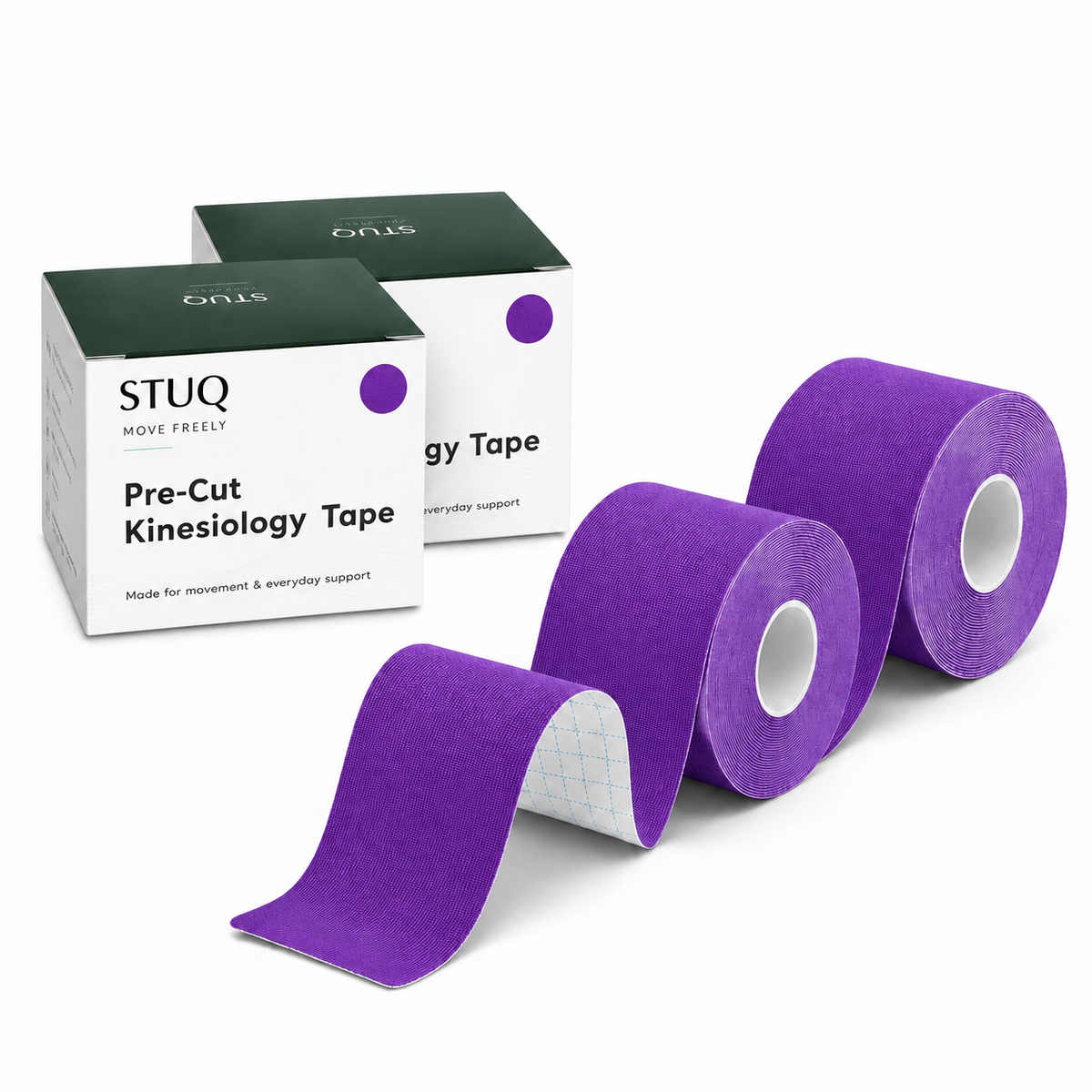
The Short Answer
Choose pre-cut strips when you value speed, consistent sizing, rounded corners, and an easy gym-bag setup. Choose a roll when you need unusual lengths, want to customize every cut, and do not mind carrying scissors.
Neither format is automatically more effective. Application technique, skin tolerance, the activity, and your expectations matter more than whether the tape began as a strip or a roll.
What Is Pre-Cut Kinesiology Tape?
Pre-cut tape comes in ready-to-use lengths, typically with rounded ends. There is no measuring or cutting before application. The format is especially convenient for travel, busy training days, and people who are new to taping.
Pre-cut advantages
- Fast preparation: peel, position, and apply according to the directions.
- Consistent sizing: every strip starts with the same dimensions.
- Rounded corners: fewer sharp edges that can catch on clothing.
- Easy to pack: no scissors required for standard applications.
- Less material waste: you use one strip at a time.
Possible limitations
- Fixed lengths may not suit every body area or taping plan.
- Highly customized patterns can require more than one strip.
What Is a Traditional Tape Roll?
A roll lets you cut exactly the length and shape you want. That flexibility can be valuable for clinicians, experienced users, or applications that need very short or very long pieces.
Roll advantages
- Maximum customization: control the length and number of pieces.
- Useful for specialized setups: helpful when a standard strip is not a good fit.
- Familiar workflow: some experienced users prefer measuring and cutting their own tape.
Possible limitations
- Requires clean scissors and an extra preparation step.
- Square corners usually need to be rounded to reduce snagging.
- It is easier to cut inconsistent lengths or waste material.
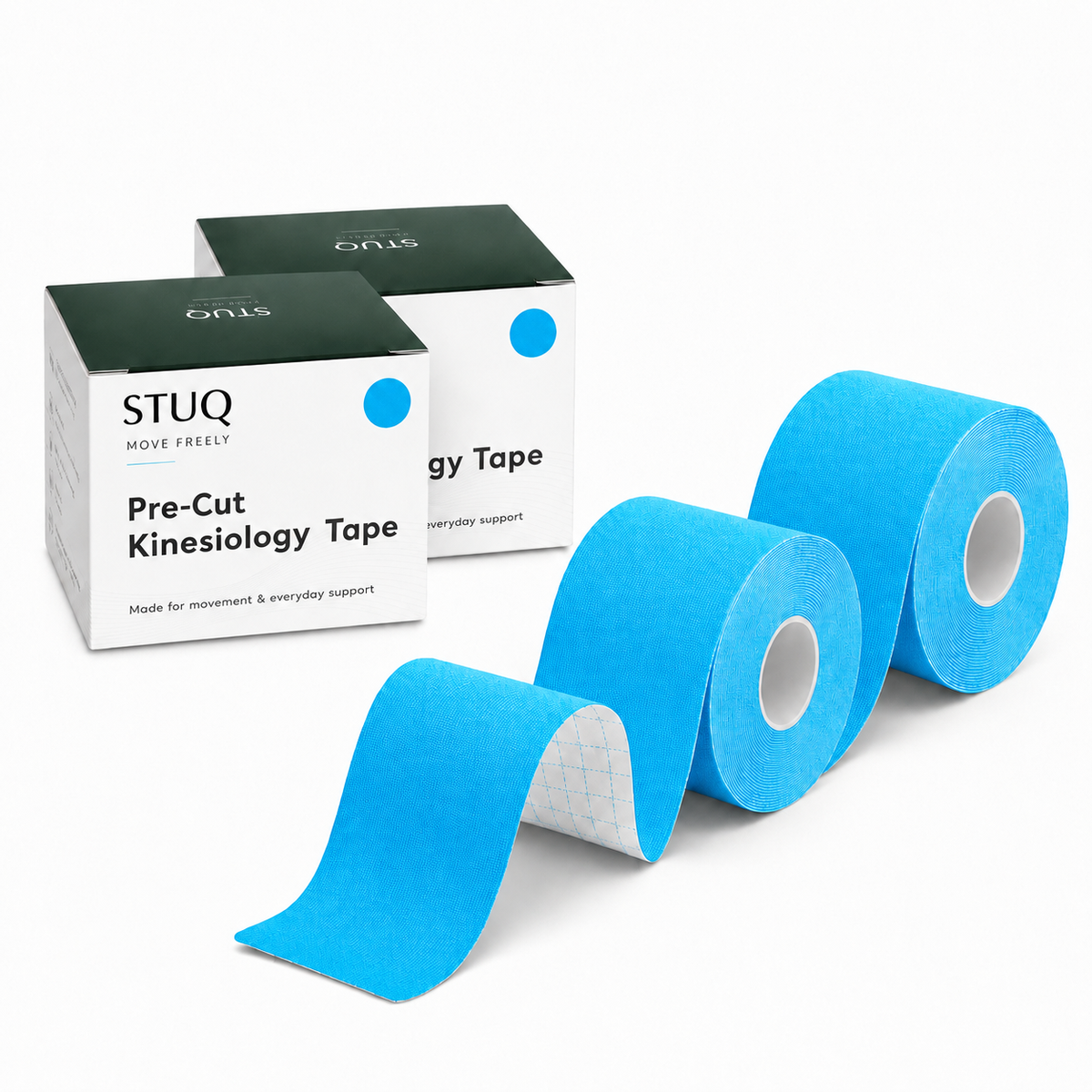
Five Questions to Help You Decide
- Where will you use it? A standard strip may suit common areas, while a customized plan may need different lengths.
- How much time do you have? Pre-cut strips reduce preparation time.
- Will you travel with it? A strip-based pack avoids the need to carry scissors.
- Are you new to taping? Consistent sizing can make the process easier to repeat.
- Do you have professional instructions? Follow the length, direction, and tension recommended by a qualified professional.
Format Does Not Replace Safe Application
Whichever format you choose, apply tape only to clean, dry, intact skin. Patch-test the adhesive first. Avoid excessive stretch and never wrap tape tightly around a limb. Remove it slowly in the direction of hair growth, supporting the skin as you go.
Stop use for burning, persistent itching, rash, blisters, numbness, unusual swelling, or changes in skin color or temperature. Do not tape over broken, infected, sunburned, or significantly irritated skin.
Why STUQ Chose Pre-Cut
We designed STUQ for people who want fewer steps between getting ready and getting moving. Pre-cut lengths and rounded ends make the routine more predictable, while playful colors keep functional gear from feeling clinical.
That convenience is the benefit we can stand behind. Tape results vary, and the format does not turn kinesiology tape into a cure, brace, injury-prevention device, or guaranteed performance enhancer.
Explore STUQ pre-cut kinesiology tape for a simple, gym-bag-ready option.
General information only. This article is not medical advice and does not diagnose, treat, cure, or prevent any condition.