

Kinesiology tape can be a useful option for some active people—but the way you apply, wear, and remove it matters. This guide focuses on practical skin safety and sensible expectations, not miracle claims.
Before You Start
- Read the product directions. Tape brands differ in adhesive, stretch, and recommended wear time.
- Use only on clean, dry, intact skin. Skip lotion or oil before application, and never tape over a cut, rash, sunburn, infection, or actively irritated area.
- Consider a small patch test. This is especially sensible if you have sensitive skin or a history of adhesive reactions.
- Know your goal. Tape may offer a tactile cue or a feeling of light support, but it should not be used to hide unexplained or worsening pain.
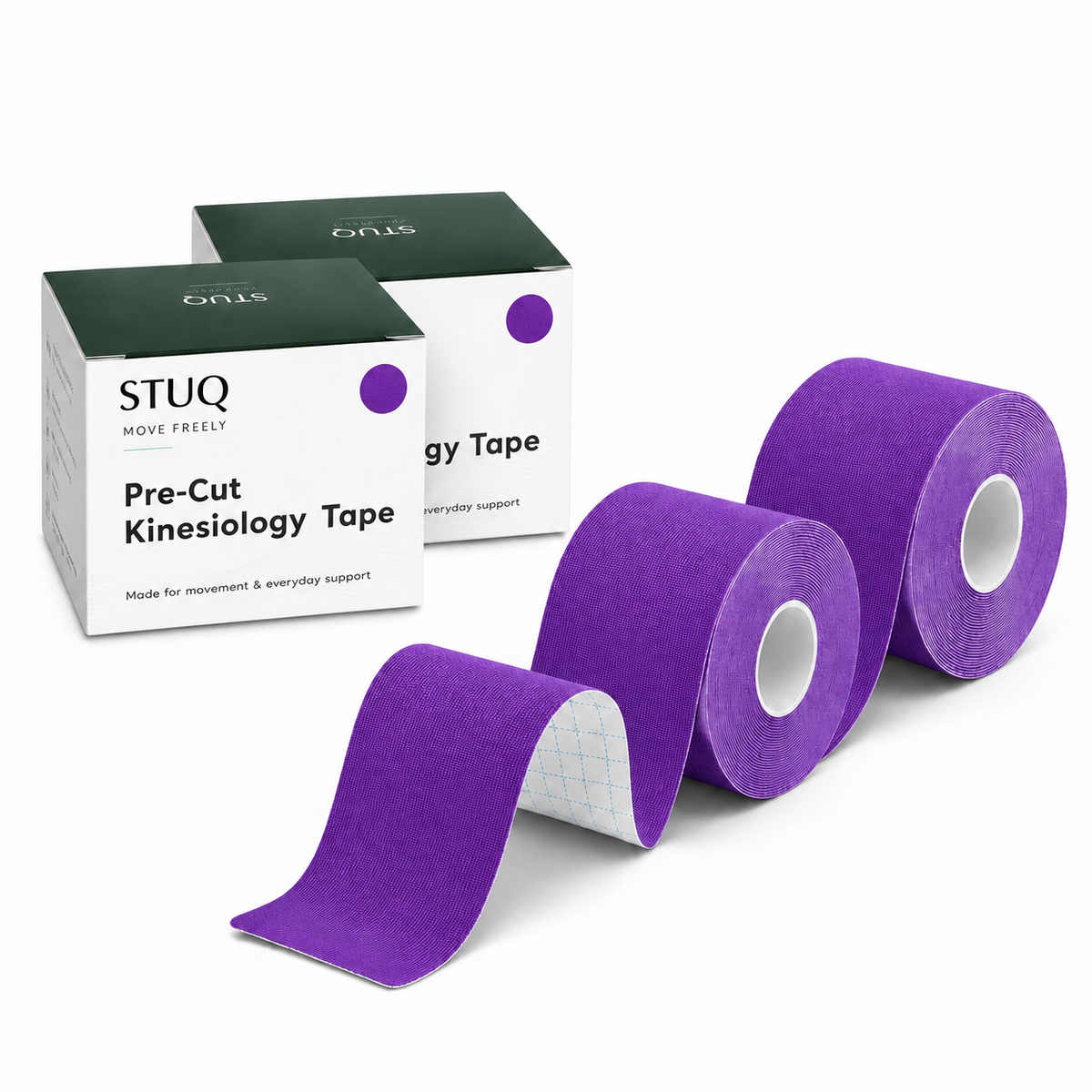
How to Apply Kinesiology Tape
- Choose the area and position it comfortably. Follow an application pattern appropriate to your goal. If you are unsure where the tape should go, ask a qualified healthcare or sports professional.
- Measure the strip. Use a pre-cut strip or cut the required length. Rounded corners are less likely to catch on clothing.
- Place the first anchor without stretch. Apply the first section gently to reduce stress at the edge.
- Smooth the middle section with controlled tension. Use only the amount recommended in the product instructions. More stretch is not automatically better.
- Finish with another no-stretch anchor. Avoid pulling the final section tight.
- Rub the tape gently. This helps activate pressure-sensitive adhesive. Do not tightly wrap tape all the way around a limb.
Check Your Skin and Circulation
The tape should feel comfortable—not restrictive. Remove it promptly if you notice itching, burning, a rash, numbness, tingling, swelling, unusual color change, or increased pain. If symptoms are severe or do not settle after removal, seek medical advice.
How to Remove It More Gently
- Loosen one edge after a shower or with warm water if the product directions allow.
- Support the skin with one hand.
- Peel the tape back slowly, close to the skin, and generally in the direction of hair growth.
- Do not rip it off quickly. A skin-safe oil may help with stubborn adhesive if it is compatible with the product and your skin.
- Wash and dry the area, then give irritated skin time to recover before considering another application.
Who Should Ask a Professional First?
Get individualized advice before taping if you have impaired circulation, reduced sensation, diabetes-related skin concerns, a known serious adhesive allergy, a history or risk of blood clots, a current skin condition, a recent operation, or an injury that has not been assessed. This list is not exhaustive.
What the Evidence Actually Says
Research on kinesiology tape is mixed and often low-certainty. Some studies report short-term changes in comfort, pain, or function for certain conditions, while others find little or no meaningful benefit. Tape has not been shown to reliably prevent injury, speed tissue healing, or improve athletic performance. Think of it as an optional complement to an appropriate plan—not a substitute for progressive training, recovery, rehabilitation, or medical care.
A Simple Way to Start
Try tape during a low-stakes training session before using it for a long workout or competition. Pay attention to comfort, skin response, and whether it actually helps you move with more confidence.
Made to move: Explore STUQ pre-cut kinesiology tape for an easy-to-pack option designed for active routines.
General information only. This article is not medical advice and does not diagnose, treat, cure, or prevent any condition.