

A good tape application starts before the first strip touches your skin. Sweat, body oil, lotion, loose edges, and rushed preparation can all shorten wear time. These practical steps can help kinesiology tape stay secure without using excessive stretch.
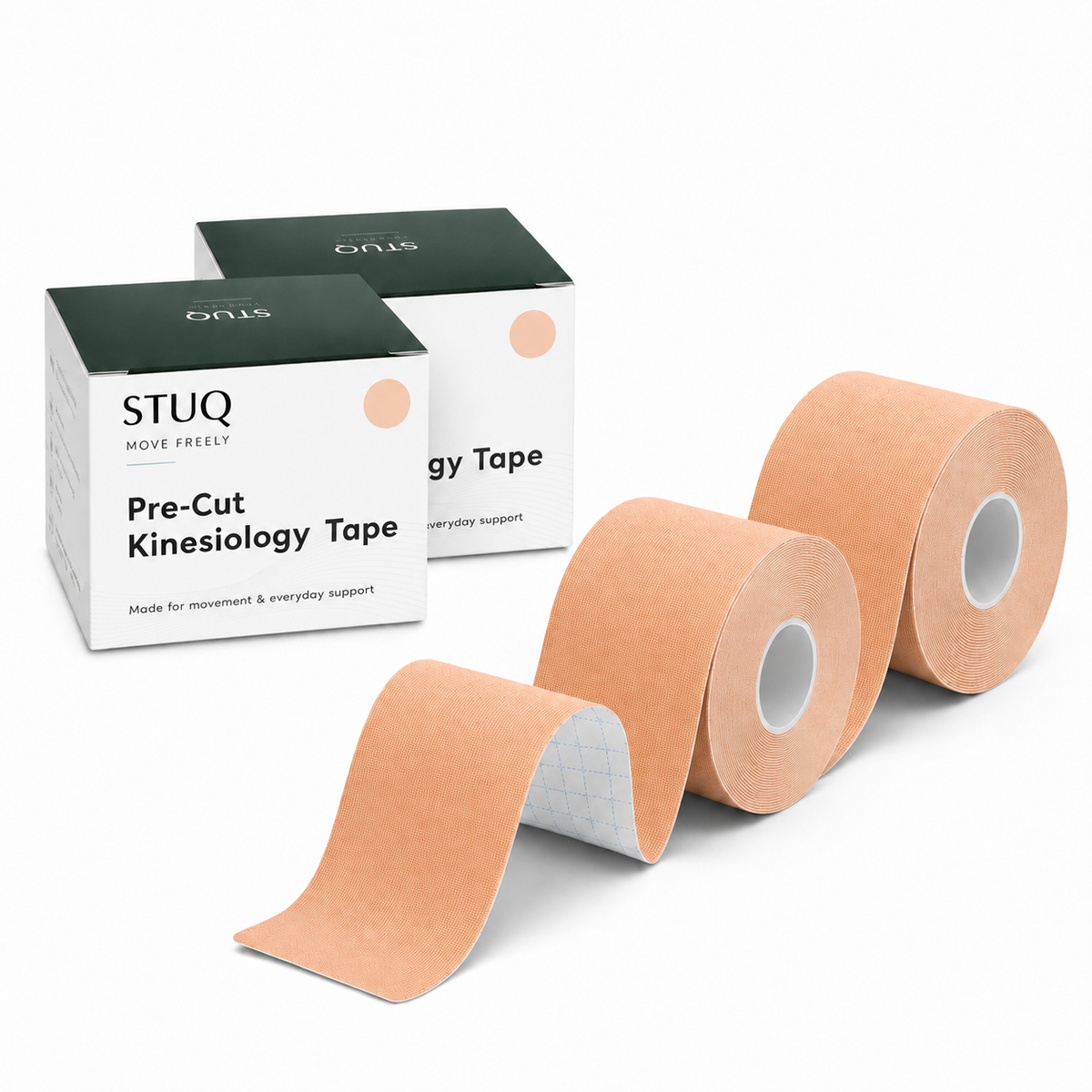
1. Start With Clean, Intact Skin
Apply tape only to healthy skin that is free from cuts, rash, sunburn, infection, or significant irritation. Wash away sweat, oil, sunscreen, and lotion, then dry the area completely. Oil-based products can interfere with adhesive contact.
2. Plan Before You Peel
Know where each strip will go before removing the backing. Pre-cut strips reduce measuring and cutting, but positioning still matters. Avoid repeatedly sticking, lifting, and repositioning the same strip because that can reduce adhesion.
3. Keep the Anchors Relaxed
The first and last portions of a strip are often called anchors. Apply them with little or no stretch. More tension does not automatically create more support and may increase skin irritation.
4. Use Moderate, Controlled Tension
Follow the product directions or a qualified professional’s guidance. Do not pull tape as far as it can stretch, and never wrap it tightly around a limb. Skin color, temperature, and sensation should remain normal.
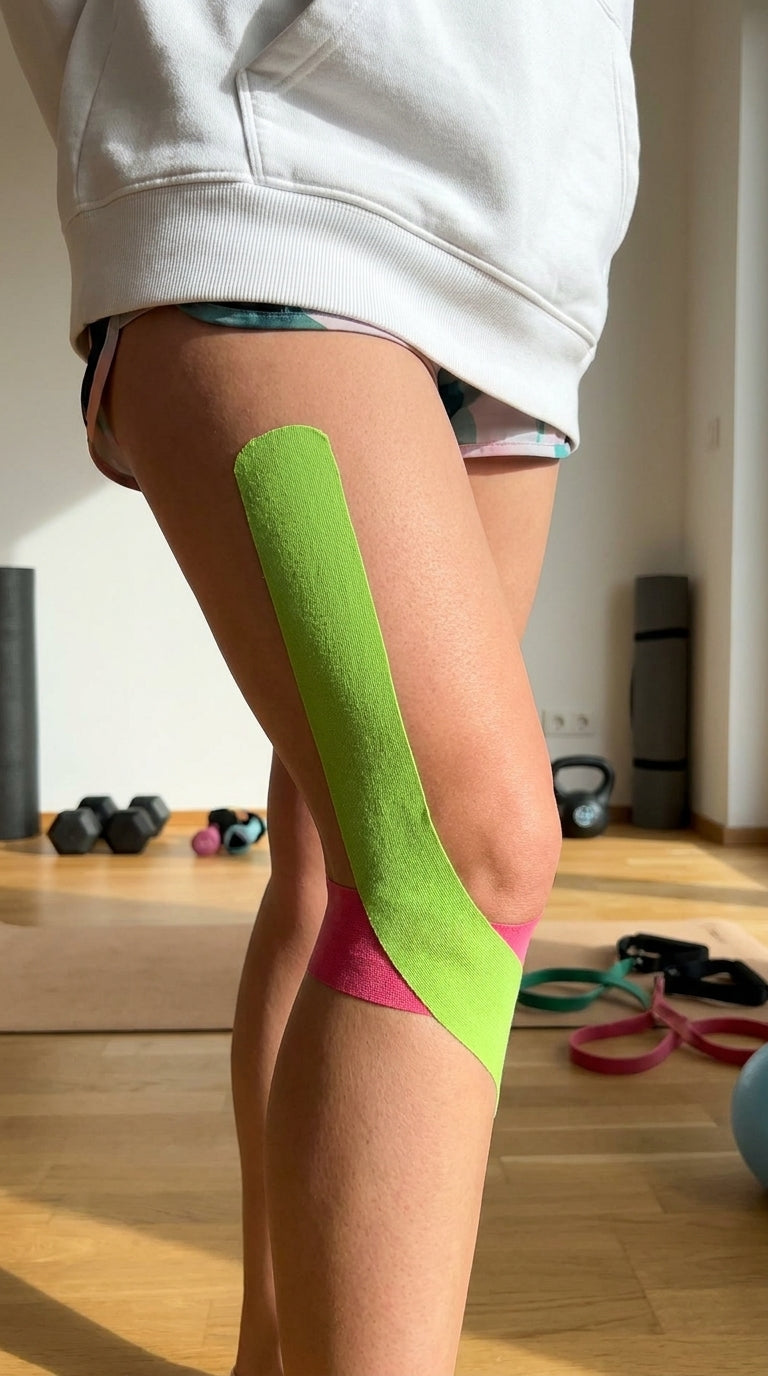
5. Activate the Adhesive Gently
After application, rub each strip lightly for several seconds. Friction and warmth can help pressure-sensitive adhesive make contact with the skin. Avoid aggressive rubbing that irritates the area.
6. Apply Before the Workout, Not at the Starting Line
When possible, give the adhesive time to settle before heavy sweating, swimming, or showering. Follow the package instructions for the recommended wait time. Test the full routine during an easy session before using tape for a long workout or event.
7. Treat Wet Tape Carefully
If the tape becomes wet, pat it with a towel instead of scrubbing it. Let it air-dry fully. A hair dryer or other high-heat source can irritate skin and is unnecessary.
8. Watch the Edges—and Your Skin
A small loose edge does not mean the entire application failed. Do not keep stretching or layering tape over irritated skin. Remove the tape if you notice burning, persistent itching, rash, blisters, numbness, unusual swelling, or changes in skin color or temperature.
What Not to Do
- Do not apply over lotion, oil, or damp skin.
- Do not use extra stretch to “make it stronger.”
- Do not tape over broken or irritated skin.
- Do not ignore increasing pain because the tape is still attached.
Explore STUQ pre-cut kinesiology tape for rounded, ready-to-use strips that simplify preparation.
General information only. Tape wear time varies with skin, activity, application, and environment. This article is not medical advice.