

Runners often spot colorful tape on knees, calves, ankles, and feet. But kinesiology tape is not a shortcut to faster times or injury-proof training. Used thoughtfully, it may provide a light tactile cue or a sense of support for some people. The response is individual, and the research remains mixed.
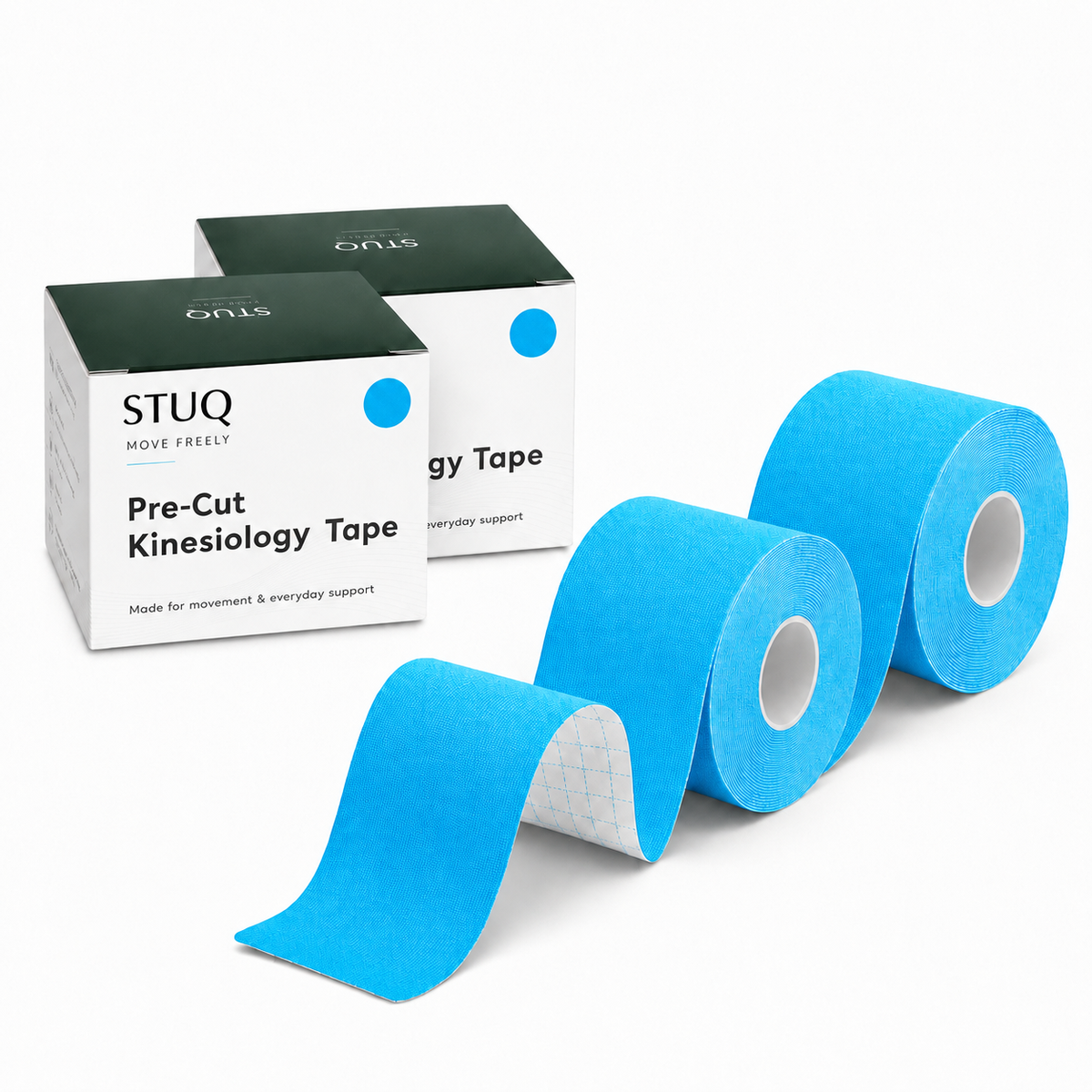
Why Do Runners Use Kinesiology Tape?
Common goals include a gentle sensory reminder, perceived light support, or improved comfort during movement. Tape does not mechanically brace a joint like a rigid brace, and no result is guaranteed.
What Does the Evidence Say?
Studies in runners and other active adults are generally small, condition-specific, and sometimes conflicting. Some report short-term changes in comfort, pain, or movement measures; others find little or no meaningful difference. Current evidence does not show that kinesiology tape reliably prevents running injuries, accelerates tissue healing, or improves endurance performance.
Common Areas Runners Tape
- Knee: sometimes used as a tactile cue around the kneecap.
- Calf or shin: sometimes used for perceived comfort during easy running.
- Ankle or foot: sometimes used as a light sensory prompt, not as a substitute for stability training or medical assessment.
A body area is not a diagnosis. Persistent or worsening symptoms deserve evaluation by a qualified healthcare professional.
Test It Before Race Day
- Patch-test the adhesive on clean, intact skin.
- Try it first during a short, easy session—not on race morning.
- Use light, controlled tension and avoid wrapping tape tightly around a limb.
- Track comfort and skin response rather than assuming it works.
- Remove it if you notice burning, itching, a rash, numbness, tingling, swelling, unusual color change, or increasing pain.
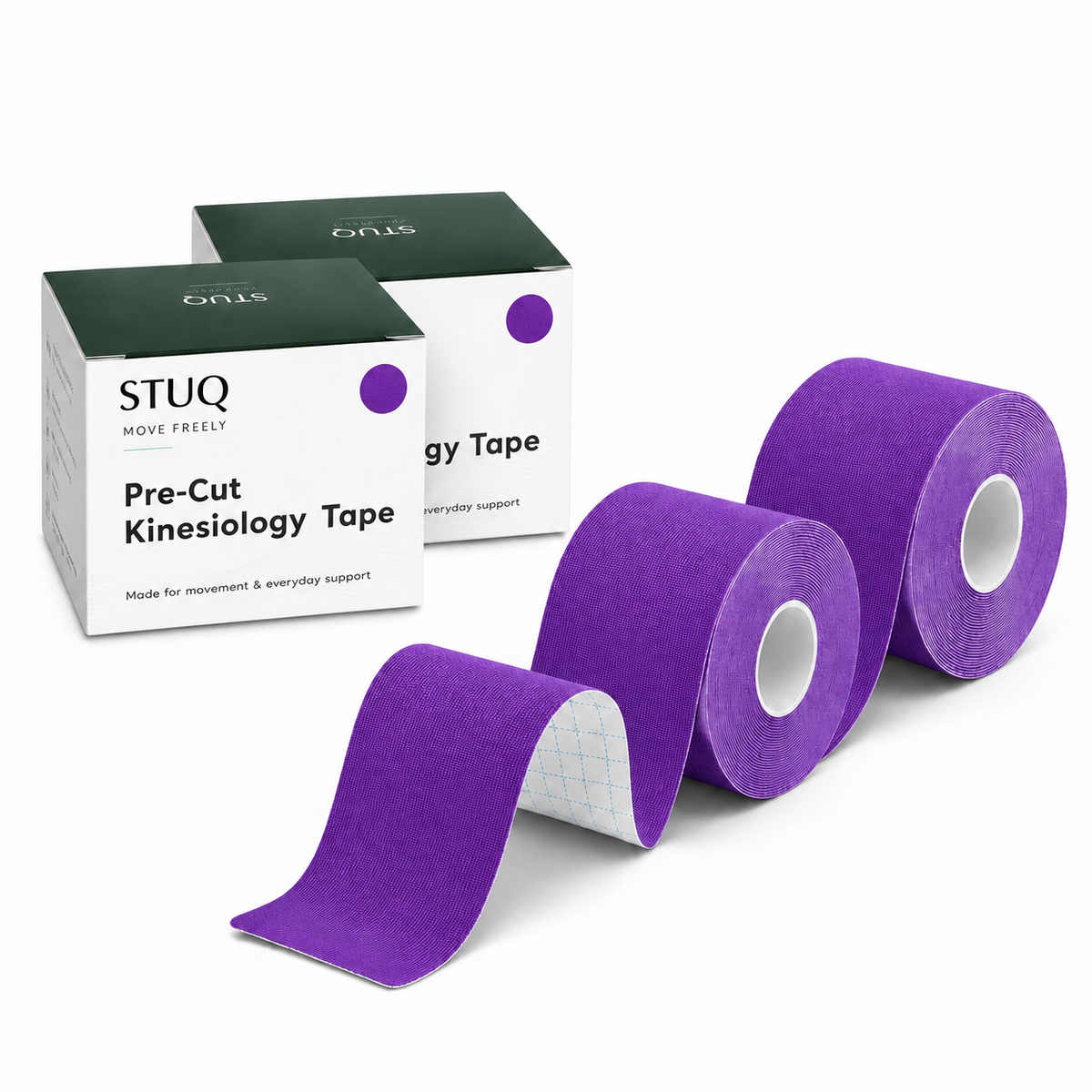
Tape Is Only One Small Part of the Plan
Training-load progression, strength work, sleep, nutrition, recovery, and appropriate footwear usually matter more than tape. If tape seems useful, treat it as an optional complement—not the foundation of your running plan.
When to Skip It or Get Help
Do not apply tape over broken, infected, sunburned, or significantly irritated skin. Get individualized advice before taping if you have reduced sensation, impaired circulation, diabetes-related skin concerns, a serious adhesive allergy, blood-clot risk, a recent operation, or an unassessed injury. Seek prompt care for severe pain, major swelling, inability to bear weight, numbness, or unusual skin color or temperature.
Made to move: Explore STUQ pre-cut kinesiology tape and test it during a low-stakes training session before deciding whether it belongs in your routine.
General information only. This article is not medical advice and does not diagnose, treat, cure, or prevent any condition.